Residential Movers in Watertown, NY
Watertown Movers handles home moves around the Watertown area, from a one-bedroom rental to a four-bedroom family house. Census figures show about 43% of Watertown homes are detached single-family houses, and a whole-house move covers every room, garage and attic included, which people tend to leave to the end. Ask how furniture is padded, taken apart and rebuilt in the right rooms. Send both addresses and your date.
Each room brings its own problems
That's what sets a home move apart. It's not a single task but eight or nine smaller ones, each with quite different challenges:
Kitchen
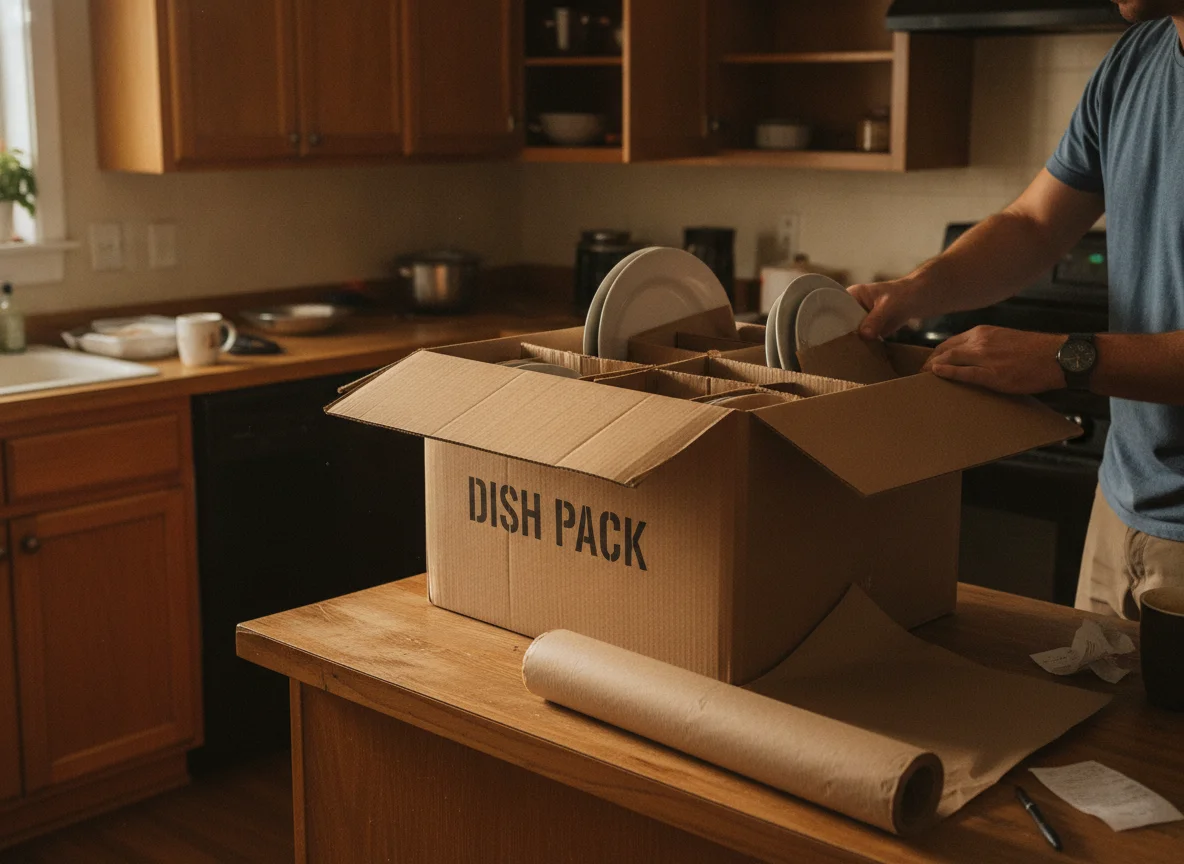
Takes longer than any other room and usually sets the pace for the whole move. Glasses and dishes belong in dish packs with dividers, not newspaper and a stack. The pantry needs sorting, not boxing in bulk: open bottles, anything that could leak, anything expired. Keep each small appliance with its own cord and parts. Defrost the fridge the evening before, and have its water and ice-maker lines shut off and drained.
Sleeping rooms
They come apart more quickly than you'd think and take longer to put back. Bed frames are broken down, with their bolts bagged and tagged to the right frame. Hanging clothes move from the closet into wardrobe boxes and back out again on their hangers, which saves hours and plenty of ironing. Main bedroom closets always hold more than they seem to.
Children's rooms
Pack these last and unpack them first. Keep a box of your children's most-loved things in the car, not the truck, and make up their beds in the new house before anything else.
Living areas
This is where a tape measure earns its keep. Check sofas against doorways before lifting, ship TVs upright in fitted cartons, and leave wall mounts in place unless an electrician removes them with the wiring. Census figures date about 44% of Watertown homes to before 1940.
Home office
Take pictures of how the cords are connected before disconnecting. Keep drives, backups and irreplaceable files with you in the car, not on the truck.
Bathroom
Small rooms, but prone to spills. Bag liquids twice, keep them upright, and box them apart from the towels.
Attic, basement, garage and shed
These are what people underestimate most in a house move, so begin with them rather than end there. Gas-powered tools must be drained, paints and chemicals dealt with ahead of time, and the attic cleared while you can still choose what to keep. Garages make more moves run late than furniture ever does.
The yard
Patio furniture, grills, planters and play structures take time to dismantle, and the grill's propane tank can't ride on the truck.
What's sold with the home
Sort this out ahead of time; it sparks more closing-day arguments than anything else. Built-in appliances, light fixtures, ceiling fans, blinds and curtains, wall-anchored shelves and TV mounts are normally counted as part of the property, not your possessions. Still, "normally" isn't a contract. Read what your purchase or lease agreement actually says, and list what's leaving and what's staying before moving day. Anything unclear is far easier to settle with the buyer or landlord a week early than with movers waiting in the hall.
Lining the move up with your closing or lease
Handing over keys at both ends on one day is what everyone wants and few manage. The gap usually falls one of two ways, and both are workable if raised early:
Out before the new place is ready.
Your belongings go into storage between the two dates instead of waiting on a truck, while you live out of a suitcase for a while.
Both homes at once.
The simpler case: spread the move over two days, set up beds and kitchen first, then return for the garage.
In both cases, speak up the moment you suspect the dates won't match. A gap planned ahead is just scheduling; one found out on moving morning is a real headache.
Moving day with kids and pets at home
If you can, have children and pets spend the day elsewhere, or behind a shut door if not. Open doors, propped gates and heavy loads don't mix with either. NOAA normal snowfall here passes 116 inches, so clear and salt the steps in winter.
Put an essentials box in your car: sheets, towels, toiletries, chargers, medicine, coffee, a spare outfit and your moving paperwork, so the first night is covered.
Station someone at the new home who knows where each item belongs. A quick answer at the door costs far less than carrying furniture twice.
Plan food for everyone. House moves run longer than expected, and lunch gets forgotten until people are flagging.
What drives the cost
The amount you're moving, how much needs dismantling, how much you've packed already, and, often the biggest of the four, how hard the house is to get things out of. Stairs, a long carry to the curb, a driveway a truck can't use and doorways that force furniture apart matter more than square footage. The local moving page covers this in depth. Crossing a state line? Check the mover with the Federal Motor Carrier Safety Administration.
A move out of state works quite differently, so read about long distance moving before booking.
Keeping belongings safe in transit
On top of the padding and wrap any move should include, a home move calls for extra gear:
Hanging-clothes boxes
Garments remain on their hangers from door to door.
Dish cartons with dividers
Meant for glassware and ceramics, which take stacking better than newsprint-wrapped dishes.
Cartons for frames and mirrors
For artwork, mirrors and glass tabletops, moved standing up.
Mattress covers
To keep marks off stairwell walls and driveways.
Straps and appliance hand trucks
For the washer, dryer and fridge; the washer's shipping bolts go back in before moving, so the drum can't knock against the case.
Floor runners, door frame pads and rail wrap
At each address, since in a home move it's usually the house, not the furniture, that gets damaged.
Home moves across the Watertown area: East Watertown, Huntingtonville, Black River, Sackets Harbor, Adams, Carthage, and the towns around them.
Home move questions
Can appliances come along?
A washer, dryer and fridge can travel like any other heavy item. Anything on gas or hard-wired into the house needs disconnecting first by a qualified gas fitter or electrician, who reconnects it at the new place; that's separate from the moving work, so book it early. If appliances stay with the house, say so at the start so nobody wraps them by mistake.
My closing date slipped. Now what?
Let the mover know as soon as you hear. Closing dates shift all the time when sales are linked, and that's a scheduling matter, not an emergency, but it's far simpler a week out than the night before.
Could the move be split over two days?
For a bigger house that's often wiser, especially if you can get into both homes at once. Beds, kitchen and the kids' rooms go first so you can sleep there that night; garage, attic and storage areas follow on day two.
How much time does packing take?
More than you'd guess, and the kitchen and garage are the two rooms that always run over. If you'd prefer to skip it, packing services can take on the whole house or just selected rooms; the kitchen on its own is what most people hand over.
What about office moves?
Those are planned a different way and often run outside opening times; read about commercial moving first.
Booking your house move
Share both addresses, the number of bedrooms, your timing and whether dates are fixed, plus anything bulky or fragile. The New York State Department of Transportation advises an Order for Service stating what's due at delivery.